
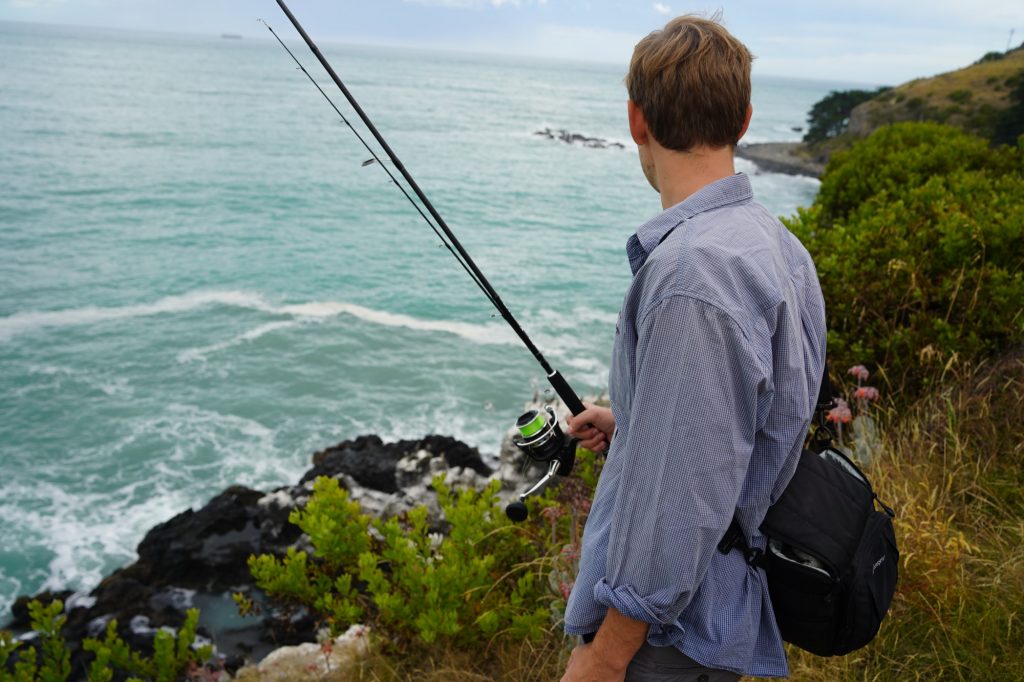
A Brits Guide to Travel Rods
I’ve got to be straight with you – travel rods and telescopic rods are more prone to snapping. This is the fact we must address from the get go. A lot of people would be better off not buying a travel rod, and it’s not exactly in my interests to say that given this site is supposed to help you spend money on tackle.
I once had a rod snap first cast into a secluded lake in New Zealand where I’d just been dropped off after a 4 hour journey… This was a painful experience as fish were surfacing everywhere. As it happens, my mate then broke his knee jumping a fence… I’m not sure which was more distressing!
Asides from having a habit of randomly snapping, the majority of travel rods and certainly telescopic rods also make significant compromises in the rod blank. This is because each joining point can be a weak point.
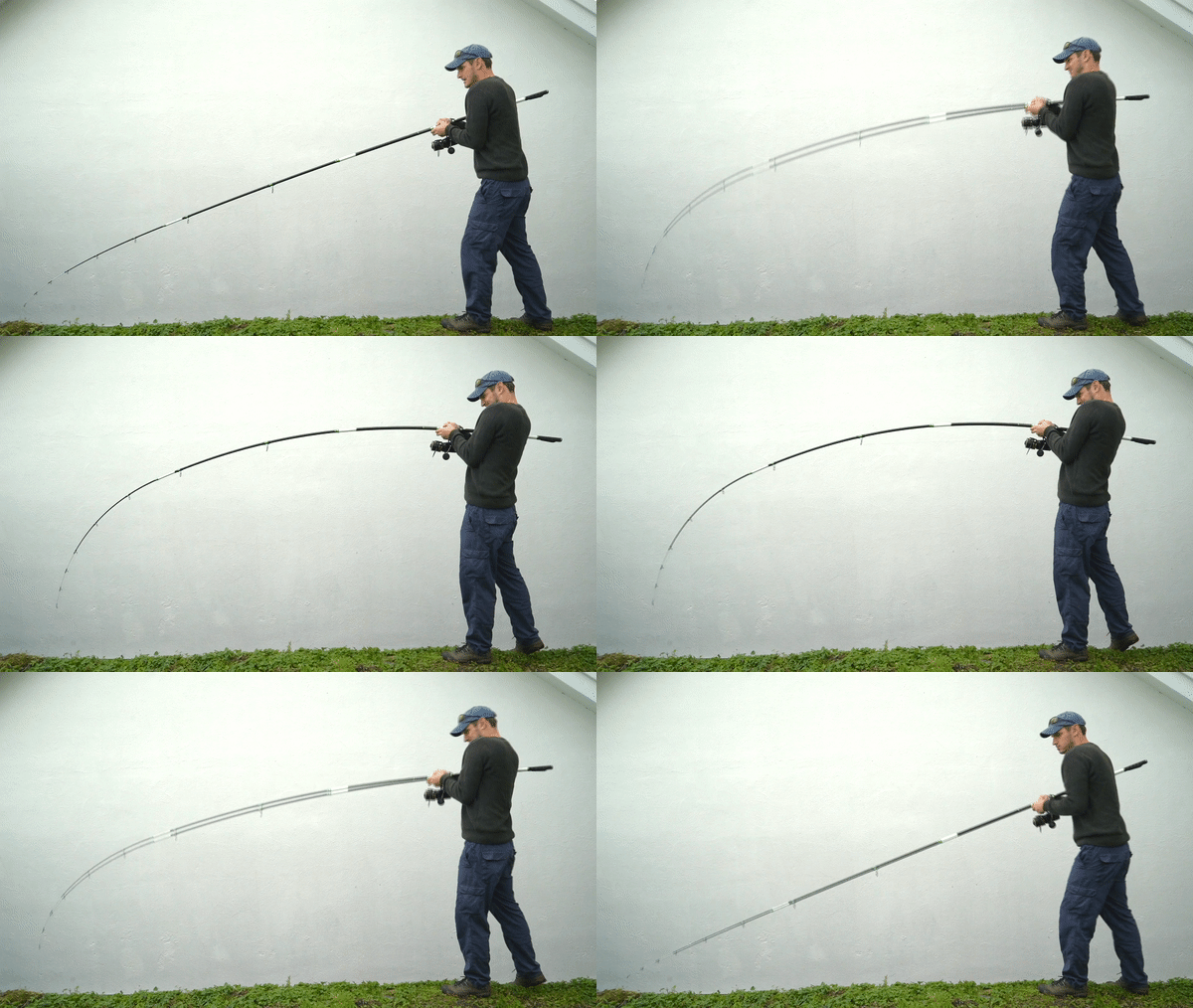
It can also be a ‘flat spot’ on the rod. That means when the rod is bent, it doesn’t bend evenly throughout the rod. The energy isn’t transferred smoothly up the rod under tension. It’s not the end of the world, but if you’re spending 150+ quid it’s not nice to see a rod bend like that.
Below is a gif of me yanking a beach caster to reveal its flat spots. You can see they limit the rods action severely. The exact same thing happens with lure rods that are multi-piece.
So, what’s a travelling brit to do?
If you’re using ultra light tackle, which for your average British holiday to the Mediterranean is what you probably should be if you’re using lures, then a rod breakage is a very high risk. If you’re fishing with a heavier rod for larger fish, or if you’re spending a lot of money, then the risk is much less.
Travel fishing locations
Fishing the Mediteranean
It can be misleading when you see on social media or the internet people catching monstrous fish in locations like the Med from the shore. Generally speaking, most of the fish in the Med are small, and best targeted with very light gear. It’s a lot of fun bringing LRF gear to holiday locations with piers and lines of boulders, where the fish tend to be overeager to smash anything bright coloured with an aggressive action.
There are some very big species too – often targeted at night time – if you have specialist knowledge on how to find and effectively target them. The locals that are catching these fish normally have everything dialled in – the tides, the time of year, the lures, the actions, the tackle, even the recent tip-offs from friends on commercial boats etc. The best way to get into those kinds of fish is to hire a guide or do a large amount of prior research.
Essentially, if it’s a family holiday, we recommend going for super light tackle. If you’re bringing a rod that casts up to 80g, it will be necessary to do quite a bit of research to have good chances at a fish that requires that kind of casting weight. Morocco may be different, because it has access to the Atlantic as well as the Med and may not be as overfished (I’m not sure).
Fishing in Mexico
Fishing kit in Mexico is much more expensive than in the UK. I found it to be roughly twice the price. You have the Gulf of Mexico on the North coast, the Caribbean on the east and the Pacific on the west coast. I don’t know anything about the Carribean or the Gulf of Mexico, but did fish several locations along the length of Mexico’s pacific coast over a long period. It is essential to have a rod of about 11ft – basically a surfcasting rod. If I was to go back, I’d reach for a very long lure rod of 11ft that could cast up to about 80g. I’d use 30lb braid and and I’d bring with me some large white plugs and white jigs – white seemed to be a popular colour with locals. I’d also bring plenty of surface lures – big ones. The last thing you want is a 7-8ft rod on the Pacific coast. It’s not a land of harbours like the sheltered bays in Cornwall where I grew up. In terms of cost, buying a good rod out there would be FAR more expensive than the UK. You’re definitely going to want to bring a decent high-end reel with you, spooled with braid, a spare spool of braid and a load of lures.
Fishing the USA
Watch out for ‘American Made’ rods, they aren’t necessarily better than some of the higher end rods made in China and are generally inferior to those made in Japan. They do still have a lot of tat out there, so don’t let the overexcitement get to you in those big tackle shops. The yanks are trying to get you excited. Stay shrewd…
Fishing Australia & New Zealand
Ok – this is going to be an exciting trip, and you’re going to need more than one rod. For New Zealand, something around 9ft that casts about 50g is useful for their most common sea fish – the snapper. There are literally snapper everywhere up north and easy to catch – similar to our wrasse only they taste delicious and grow to 20lb from the shore. On the south island, the same set up will do you for Kaiwai, which are very plentiful in the estuary mouths – actually at around 60% of their original pre-industrial population. On the south island, the sea fishing from the shore is generally not nearly as good as the north island and you might want to swap that rod out for a much lighter trout rod or even fly rod. Right down at the bottom of the south island you can catch Blue Cod with the same rod already mentioned. The second outfit you’ll need is something much heavier for the King Fish. Nothing on this page is that relevant for these species unfortunately, I can only recommend you check prices for high end spinning reels before you go to check where it will be cheapest to buy something with a serious drag. E.g. Daiwa Saltiga for the Kingfish (not necessary to go that high end of course, but something with a very decent is necessary).
If you’re bottom fishing with baits – a beachcasting rod that casts up to 6-7oz would be needed depending on location. There is no ‘scratching’ option with all the sting rays etc about. That’s too big a topic to delve into here, but suffice to say the fishing is going to be insane, especially around Northland. It’s getting my buzzed even thinking about it. Reach out at [email protected] for more personalised advice, I spent 2 months solid fishing the whole of NZ with guides.
Fishing the Canary Islands
The Canary islands have far superior fishing to the Med. They also have species of a huge range of sizes from the shore. If it’s a holiday and you’re going to be hanging around marinas and boulder outcrops – something like the light shore jigging rods from Major Craft that we look at later in this article is perfect. A rod that casts 30g for your smaller species, where there is still a chance at something larger. I’d recommend scaling up your reel to the largest size that will fit on your rod comfortably. You don’t really want to have a 1000 or 2500 size reel and hook something 10lb+ if you can help it!
If you’re on a dedicated fishing trip to the Canary’s there is so much potential, and the exact rod you need is going to depend on what you’re targeting and where. A rod casting up to 60-80g is going to be a lot more versatile out there for working bigger hard lures etc for the larger species. We’ll hopefully put together a full guide on this in the future for FISHMAG readers.
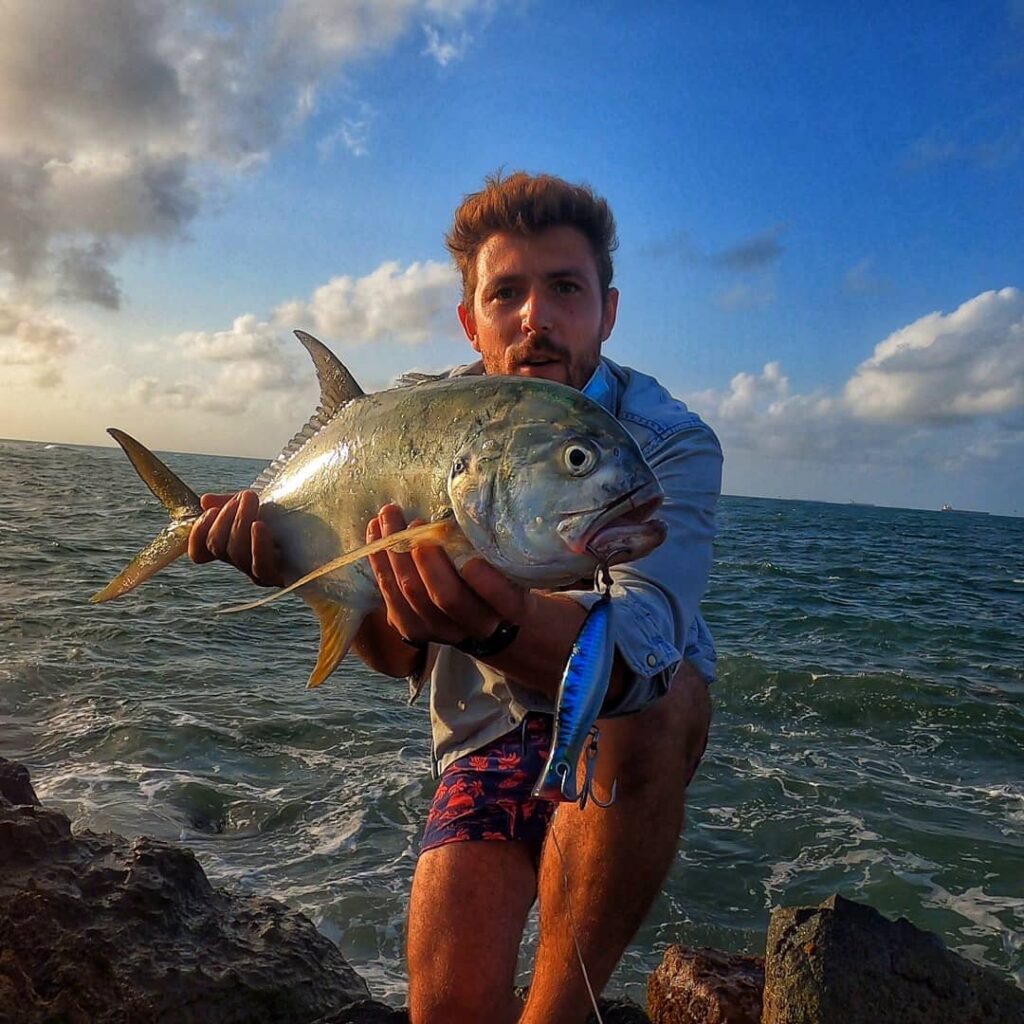
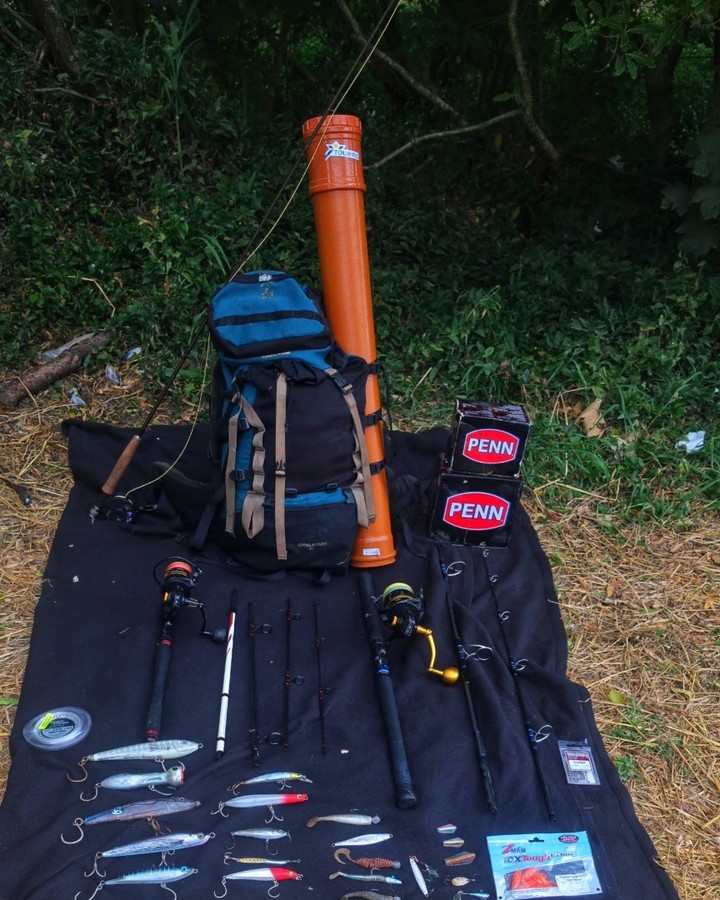
@thefishingbackpacker and others I’ve met have had great success while fishing completely alone. These people have in common that they are very good at finding locals that will share tips with them. A change in lure colour, a change in timing, a change in tide, a change in retrieval – it can change your results big time when in foreign lands.
Under £100
Travel rods under £100 are going to be pretty limited pieces of kit, just because making a good travel rod is more expensive than making a decent two piece rod. As mentioned above, these rods are highly likely to be prone to breakages during the cast or while fighting fish.
Anyway, let’s get to the rods…
£100-200
Penn Overseas XT Inshore Lure Rod 8ft 15-40g – 8’8″ casting 50g or 8’2″ casting 44g
This is one of the rods that @thefishingbackpacker told FISHMAG he travelled the world with, with great success. He told us it was a robust rod and he was using a lot of hard lures and jigs with it. The rod has a super fast action, so the recovery is quick. We think this is a very solid option as a dedicated travel rod, particularly if you’d prefer something slightly more rugged, with a slightly thicker blank. Perfect if you’re going to be beating your kit up a fair bit. The rating of 15-40g is within that ‘standard UK bass fishing range’ but is plenty for species up to 5-10lb. If you’re used to using Japanese blanks that are super thin etc, this won’t feel as slick as that, but then if you’re travelling around in a van or staying in hostels you may not want a noodle stick with you!
Penn Overseas II Offshore Casting, 7’8″ to 200g here and 8’8″ to 150g here – comes with rod tube
A premium feeling rod currently available at an absolute steal. If you need a rod for targeting larger species with lures from an inshore boat, or for fishing calmer waters for big fish from the shore, for instance, with poppers and big plugs, this could be the rod for you.
Major Craft Hardrock Custom Travel 764M 7’6″, 5-25g – here
This rod is a fantastic length and casting weight for using light lures in the Med around harbours where you do not need extra length for the casting distance. Oftentimes in these situations you are fishing close into your feet. A great light lure rod for those trips where you’re not expecting to catch giants but don’t want to be completely undergunned with an LRF rod (casting under 10g).
High-End Rods
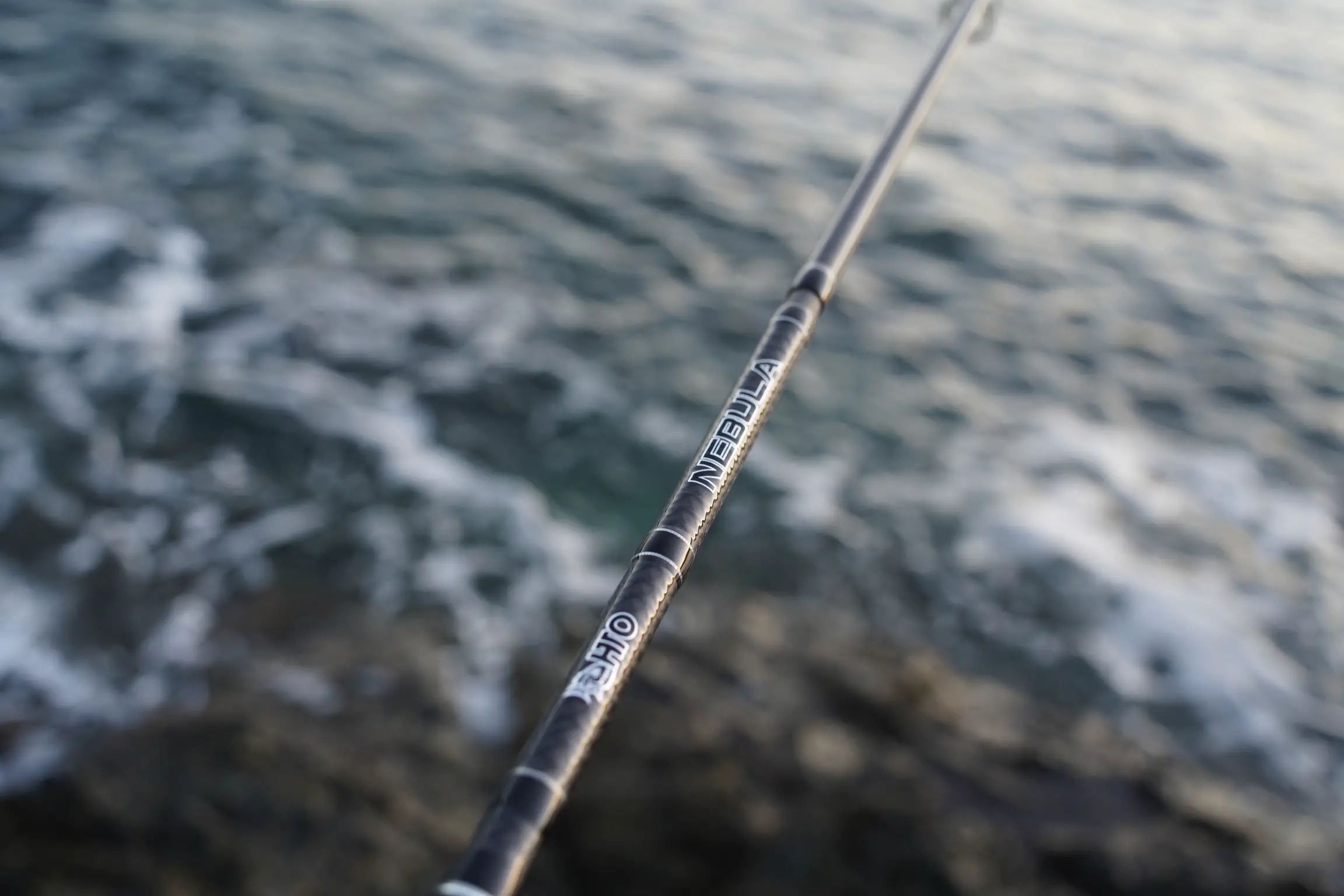
HTO Labrax Travel – the closest thing to the Nebula travel, but an upgrade, but also much more expensive. – Available here.
A very premium travel rod from the makers of the Nebula. Given that the Nebula is the best travel rod we’ve ever come across at its price, this is likely to be a very decent rod. Unfortunately, the price does reflect that, whereas with the Nebula the price is low relative to quality.
Tenryu Super Mix 240 Travel – just shy of 7’2″, 28-110g, available here
Known amoungst die hard lure anglers as some of the best rods ever made, this Japanese made rod, imported into France where they have a cult following. Huge power in the butt section you can tackle larger fish.
Can I use a travel rod for all my fishing?
Some of the new / very high end travel rods are seriously good quality, you almost don’t notice. Predictably the differences get smaller as you spend more.
Another benefit of the travel rod is a lot of rod breakages happen due to car doors or car-related incidents. One of our rods has been a victim to sliding the car seat back a bit too far. A rod being half the size can help you tuck it away out of harm’s way, especially in a loaded-up car driving down the coast. They can also be perfect for public transport, tucked up neatly away in a bag.
Make sure it fits in your bag!
One thing to note, just before you buy the travel rod, make sure it fits in your suitcase! although you should be able to put it diagonally if space is short.
Why you might need a travel rod
Taking a regular fishing rod on holiday can add to the complexity of the trip. It’s another thing to pack, you have to drop it at a different place, it’s a weird shape so it’s another thing to lose, then you’ve got to pick it up from a different part of the airport, and the list goes on. With a travel rod, you can often put it in your hold luggage, and you’re good to go.
What are the potential cons?
Generally, with travel rods, there is a trade-off that has got to be made between the strength and sensitivity of the rod vs convenience. This does vary brand by brand. Some travel rods from brands are known to be stronger than the non-travel rod version. The higher-end travel rods can be almost indistinguishable from the normal two-piece rods. There are four main drawbacks:
Feels heavy
Strangely two-piece rods are usually lighter than one-piece rods, but due to the weight distribution, one-piece rods feel lighter. This is inevitable due to the additional strengthening required around each extra joint, meaning there is more weight nearer the tip. This effect is amplified in cheaper rods. It varies greatly depending on the manufacturer, with some rods it’s not really noticeable.
Loss of strength
Each joint in the fishing rod adds another point of weakness. This can be caused by material like sand getting in the joint, wearing away the rod. Most of this can be mitigated by proper care with your tackle. Basically a quick rinse-off, and not putting your rod in the sand pretty much solves this.
Loss of sensitivity
This is due to some of the vibrations that transmit bites being lost in the joint. So the more joints, in theory, the less sensitive the rod will be. This again varies by the brand of the rod. Two-piece rods can generally provide all the sensitivity you need. We’ve been using the HTO Nebula 4 Piece travel rod and that is pretty darn sensitive.
Flat spots
This is more of a problem on the budget end rods. This is when the rod does not bend with the rest of the rod, creating ‘flat spots’. This would generally occur around the joints. This puts additional strain on the rod. This flat-spot effect diminishes in the better-built, more expensive rods.
Telescopic vs multi-piece rods
Multisection rods are superior in almost all cases, however, telescopic rods win on convenience. They pack smaller and can transport the rod set up more easily.
Multi-section rods have better action, are stronger, and will be more sensitive. Telescopic rods are particularly prone to breaking. We’d almost always recommend you get a multisection rod over a telescopic. If you are just a very casual angler and the slightly smaller size is essential, a telescopic rod might be preferable.
A word from world travelling lure angler, Bram Vangindertael:
We got in touch with Bram, a Belgian lure fisherman that has fished all around the world from his backpack. To get to the point, he told us that he likes PENN travel rods, finds them to be robust and hasn’t had one snap yet. He sticks the in his hold luggage and says clothes are cheap to buy, but good fishing kit is tricky to find, so he just brings less clothes to fit his rod and reel. He also gave some tips for fishing abroad.
“I do my research on instagram. I try to contact local fisherman and see if they have time to fish a session with me. Fishing stores are also helpful and when you are on site just talk to the locals. Google maps and Navionics are really helpful in finding good spots. And of course – if you go sea fishing, I plan my trips according to the tides and moon phase.”
Surf fishing for big bass | Grant Woodgate
Surf fishing for big bass with Samson Lures | Masterclass with Grant Woodgate Few people…
The best braided fishing lines, ranked
The best braided fishing lines, ranked We look at the best braids, from the budget…
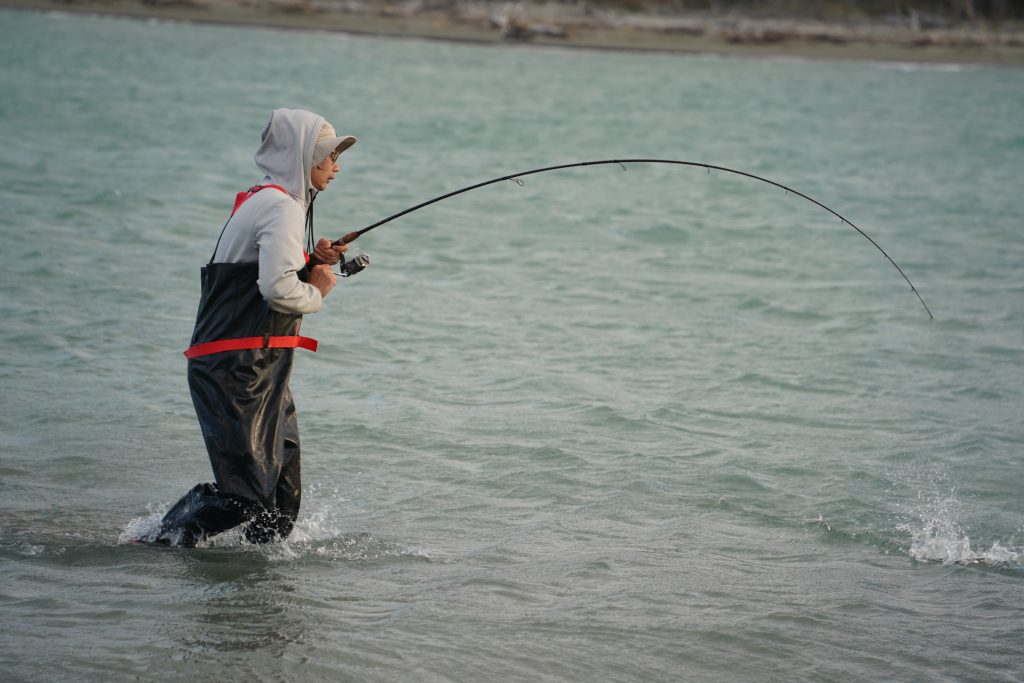
The best bass rods | Finding your next stick
The best bass rods | Finding your next stick The most common bass fishing setup…
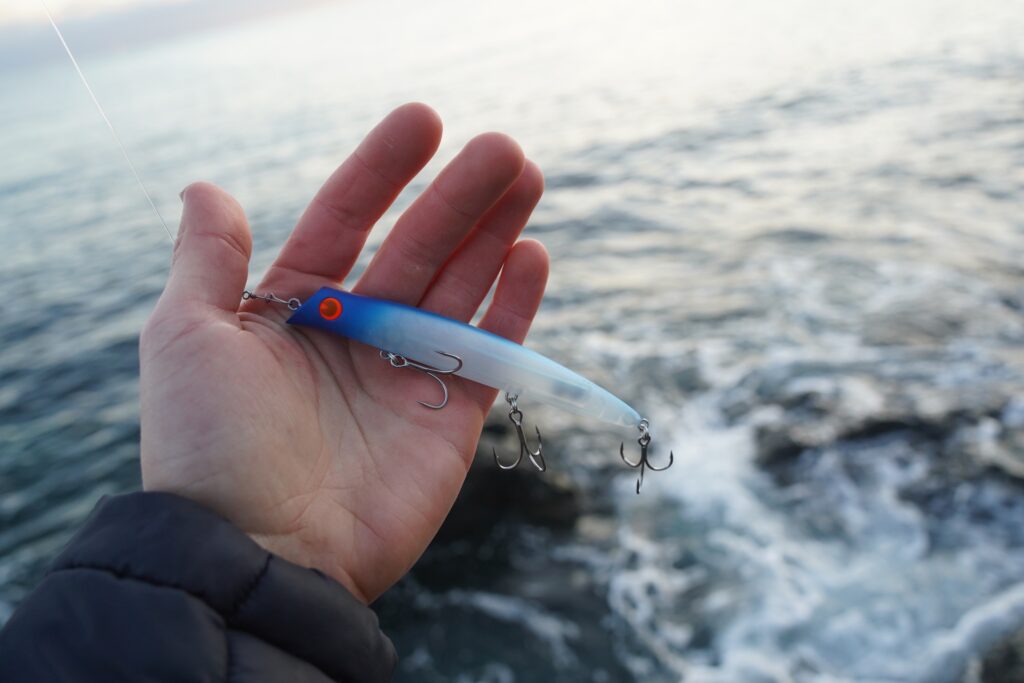
The UK’s Best Bass Lures
The UK’s Best Bass Lures Let’s start by looking at the three bass lures that…
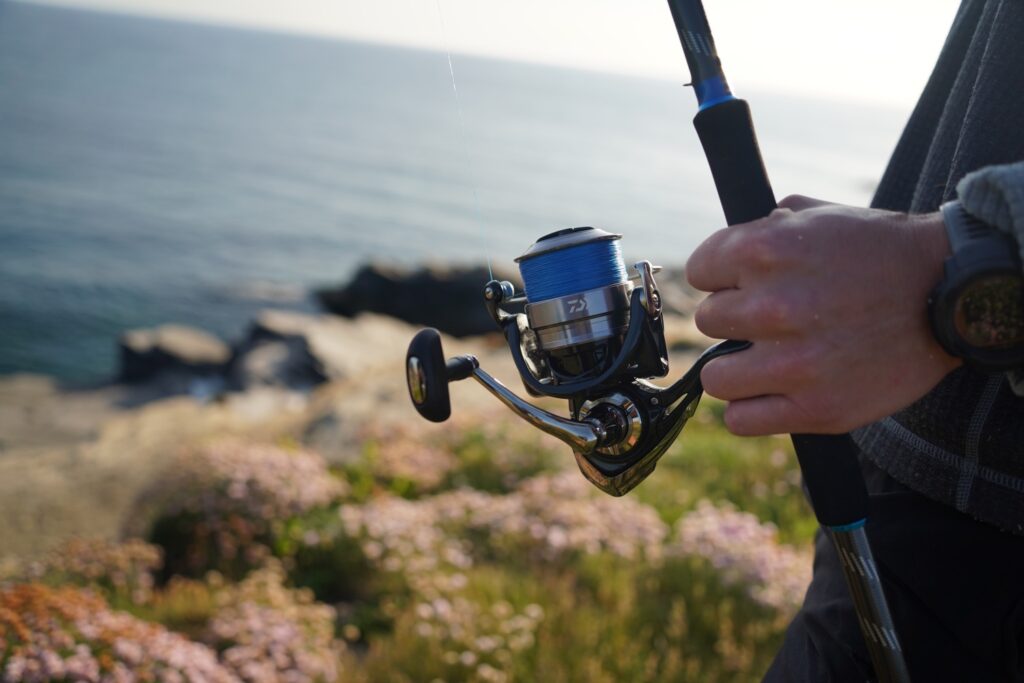
The Ideal Lure Fishing Set-Up
Lure fishing set ups, everything you need. In this article, I will recommend specific rods,…
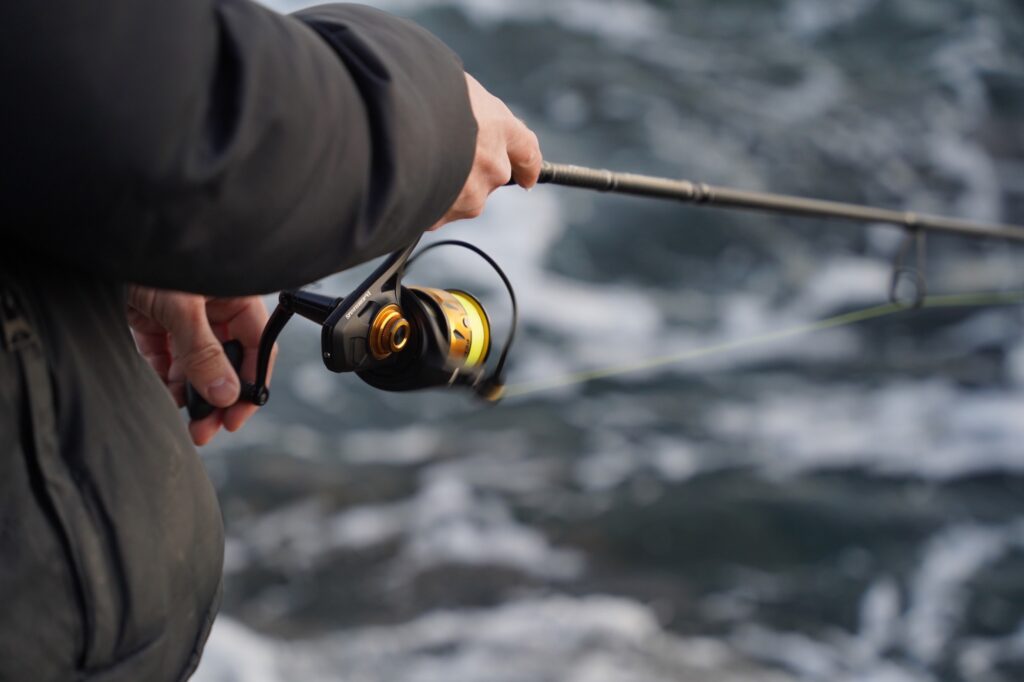
Rock Fishing with Lures
Rock Fishing with Lures You’re sat, perching on a rock below a colony of cormorants….