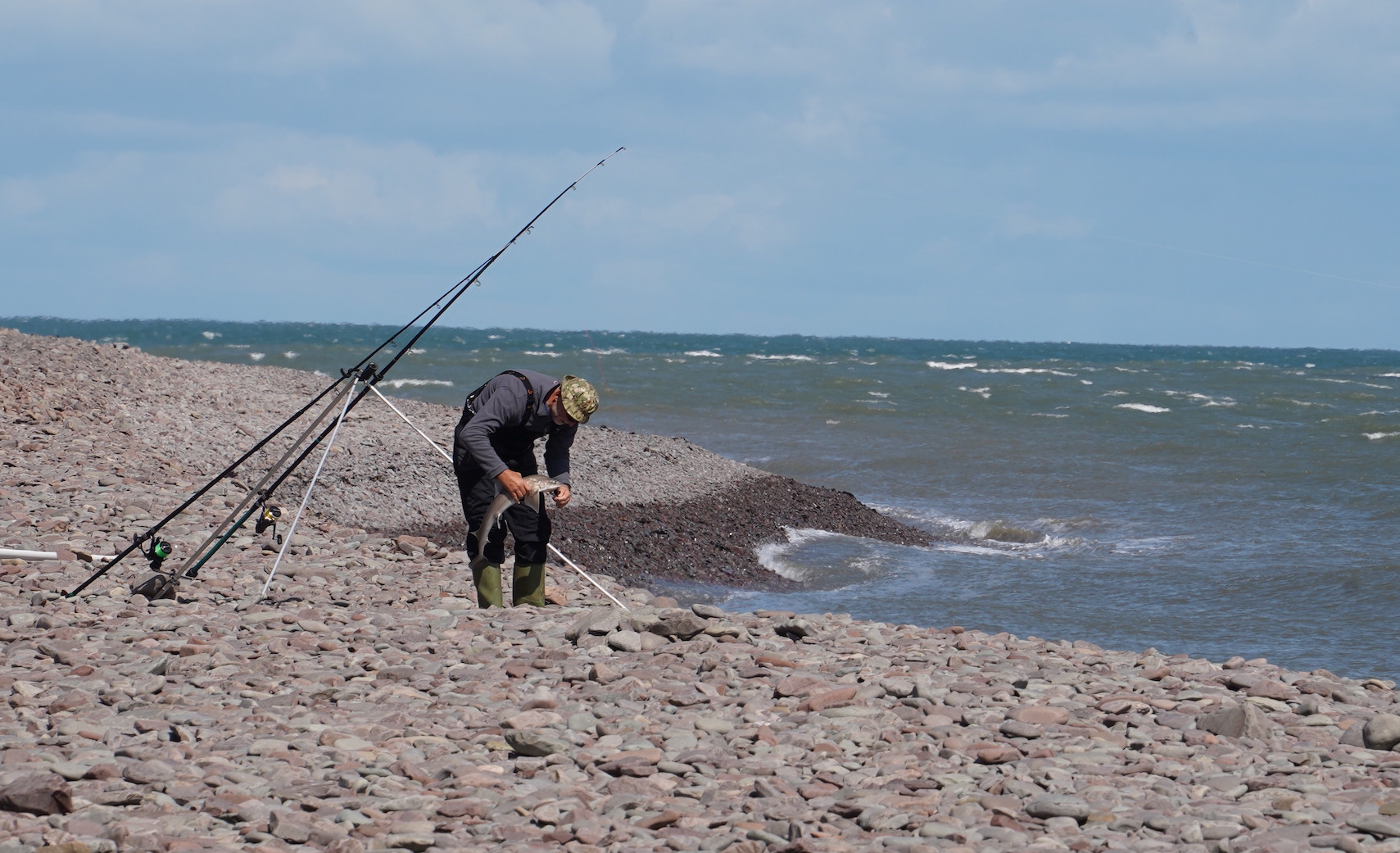
Beachcasting rods | Find the best
A beachcasting rod allows you to cast further, hold leads on the bottom even in current and land some of the UK’s larger species from the shore. They come at different lengths, max casting weights and rod actions to suit different purposes.
In this guide, we will look at the different types of beachcasters and explain how to choose the right one for the fishing you do.
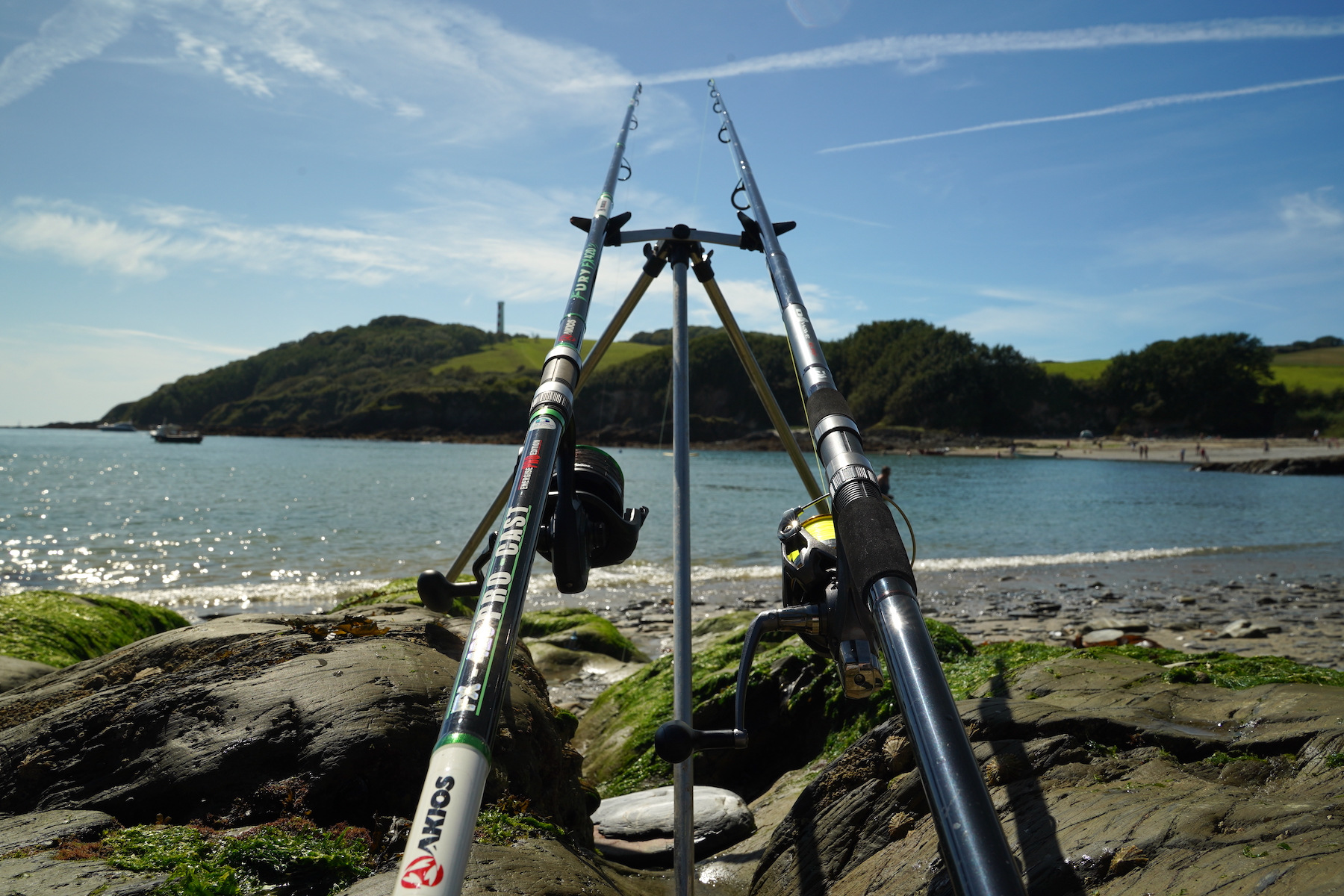
How to choose a beachcaster
The best beach casters cost over £500, but you can get a fully functional and reliable rod that does everything most anglers need for £70-100. The worst beach casters are usually sold in cheap rod and reel combos. Those are perfect for mackerel fishing on holiday but won’t have the casting distance or power to handle heavier leads.
A good beachcasting rod will be sensitive, light weight to hold and and will feel more balanced in your hand. It will last your lifetime and recover more quickly when flinging weights to the horizon. These rods allow you to detect bites from fish more easily. They allow you to cast more accurately.
The main considerations when buying a beachcaster:
- Rod length: beachcasting rods can be between 11-16ft, typically they’re around 12ft
- Casting weight: maximum casting weights can be between 4-8oz
- Target species: there are specific casting weights and lengths that are suited to different species and types of ground
- Type of reel: there are specific rods for multiplier reels, they typically have more frequent and smaller eyelets.
If you primarily fish sheltered estuaries and or surf beaches for bass and flatfish, an 11ft 2-4oz rod is recommended. If you fish rough ground and target big fish like conger and huss, a rod that casts up to 8oz around 11-12ft is ideal. If you fish huge estuaries or shallow-water beaches with clean ground, a super-long continental rod will allow you to cast much further. If you’re looking for an all-round beachcaster, go for something that casts up to 6oz and is about 12ft long.
Let’s dig some more into each different type of rod.
Types of beachcaster
Heavy beach casters
Best rock fishing rods
Beach casting rods that can cast up to 8oz are pretty standard. They are about as heavy as shore fishing gets in the UK. These rods are useful when you need an 8oz lead to hold in an area with a strong current. This is common in highly tidal estuaries and expansive surf beaches. These rods also come in handy when fishing over the roughest ground. The stiffness in the rod allows you to pull through snags more easily. Steering conger and huss away from snags is also important. They will try to crash dive into the kelp once hooked.
Pair with an 8000+ size reel.
Light beach casters
Best estuary, bass and flatfish rods
‘Rods branded as ‘bass rods’, ‘flatfish rods’, or ‘estuary rods’ are all the same. They measure about 11ft and can cast up to 4oz. These rods enhance the enjoyment when targeting species like bass and fatties, which don’t grow into monsters! They also allow for more subtly presented baits. There are some limitations to these rods. 1) When you need to hold a lead in a current 2) when you need to pull through snags or 3) when you need to extract a conger from a hole! Apart from these situations, these rods are perfect for all UK shore fishing with baits.
Pair a light beach caster with a 6000-7000 size surf reel from Penn or Daiwa or something larger from Shimano. We have a full reel size guide here to make sure you find something that balances well.
Continental style rods
Best rods for distance casting
Continental style rods have gained popularity for fishing in large estuaries and sandy beaches. Anywhere that long casting distance is essential. These rods measure between 14-16ft+ and possess a light blank and super fast action, enabling anglers to cast further than before.
The rods are designed to bend heavily during the cast throughout the rod blank, before snapping back to achieve much further casting distances, even with light rigs. It’s often possible to cast 180m+ with these rods. UK anglers adopted them from anglers in the Med, hence the name “continental”. They are particularly well suited to large estuaries and shallow beaches where a super-long cast can give you an advantage.
Some continental rods are designed for casting very low weight rigs, such as 3-4oz. Others have more typical casting weights for beachcasters. The main feature is the blank’s length, thinness and that unique action. Their limitation? They are awful at pulling out of snags as they just bend into them, and they are awkwardly long for fishing anywhere other than a large open space.
There are two main types of rod tip on continental rods: hybrid tips and power tips. The hybrid tips are more sensitive for bite detection and the power tips allow for further casting. Materially, the difference is that the power tips are made from higher density stuff.
What to look for in a continental rod
True continental style rods are high end, specialist bits of kit. They have a light, thin blank and a fast action. It’s tricky to tell from a description alone whether a long rod really has the ‘thin light blank’ and ‘fast action’ it claims, or whether it loads properly all the way down the blank. To be a true continental style rod it needs to be light as well as long, not just a long beach caster.
If you’re looking for a super long rod but don’t want a fast action and light blank, standard beachcasters casting up to 8oz are also made in longer lengths (15ft+). These give you the benefits of extra length plus extra rigidity if you fish over mixed ground with snags. That’s useful if you need distance and also need heavier leads to grip the bottom, for instance when fishing in strong tidal current.
Pair all the above with a 7000-8000 size surf reel from Daiwa or Penn or a 10,000+ from Shimano. (sizes are not the same by brand, which is why the numbers are different for each brand)
All-round Beachcasters
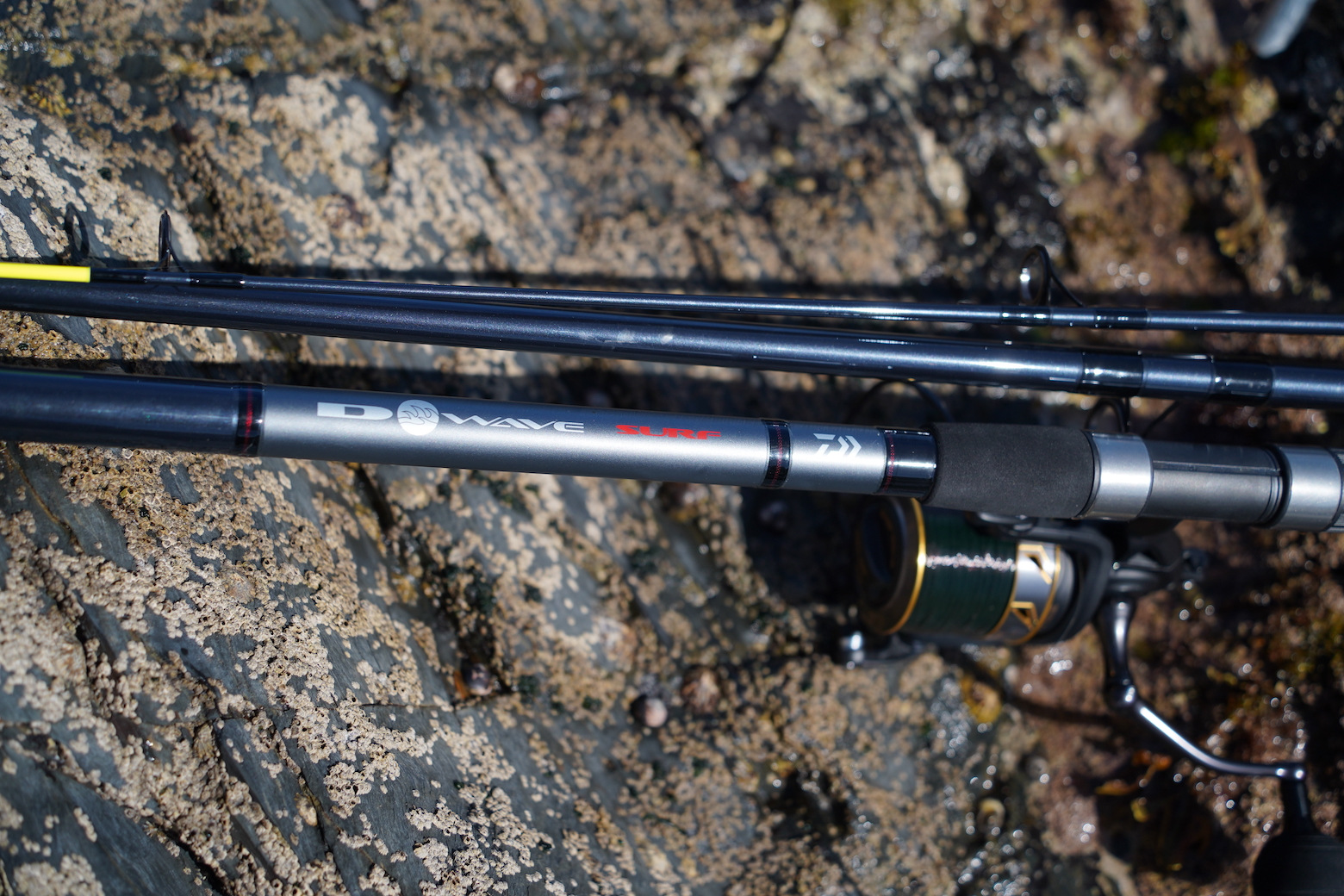
A 12ft beachcaster that casts up to 6oz is the most versatile sea fishing rod you can buy for shore fishing with bait. It’s short enough that many will still take it to rock marks or harbour walls and sits in-between an estuary rod and a heavy beachcaster in terms of max casting weight. Pair with an 7000-8000 size reel and you’re golden.
For beginner harbour wall fishing with a beach caster, the most common purchase is a 10ft beach caster capable of casting 4-6oz. It’s only really a beachcaster because it isn’t anything else – a rod like that would more accurately be called an ‘all rounder sea fishing rod’. From harbour walls you don’t need a rod longer than 10ft. It’s a burden to have those extra inches on a busy harbour wall. We have a guide here aimed at people getting started fishing or that want a complete ‘all rounder’ set up.
“Match rods” – a confusing term in sea fishing
Some readers may be wondering why we haven’t mentioned ‘match rods’ with their own category. The issue here is that there is that there is no consensus on what a ‘match rod’ is. Some brands use the term to refer to very powerful rods for casting long distances, that are designed to load only under weight from heavy leads. Other brands use ‘match’ in the names of rods built for completely different purposes.
Many anglers think a match rod has an uncommonly sensitive tip for detecting bites from smaller species like dab. They think of a match rod as something for fishing clean ground with light rigs. These two uses are literally opposites, and so we don’t use the term at FISHMAG to avoid confusion. What does ‘match’ mean? In every case, it means the rod is marketed at people that take fishing seriously enough to be competitive about it! That’s the only thing that’s universal about match rods.
Telescopic and travel beach casters
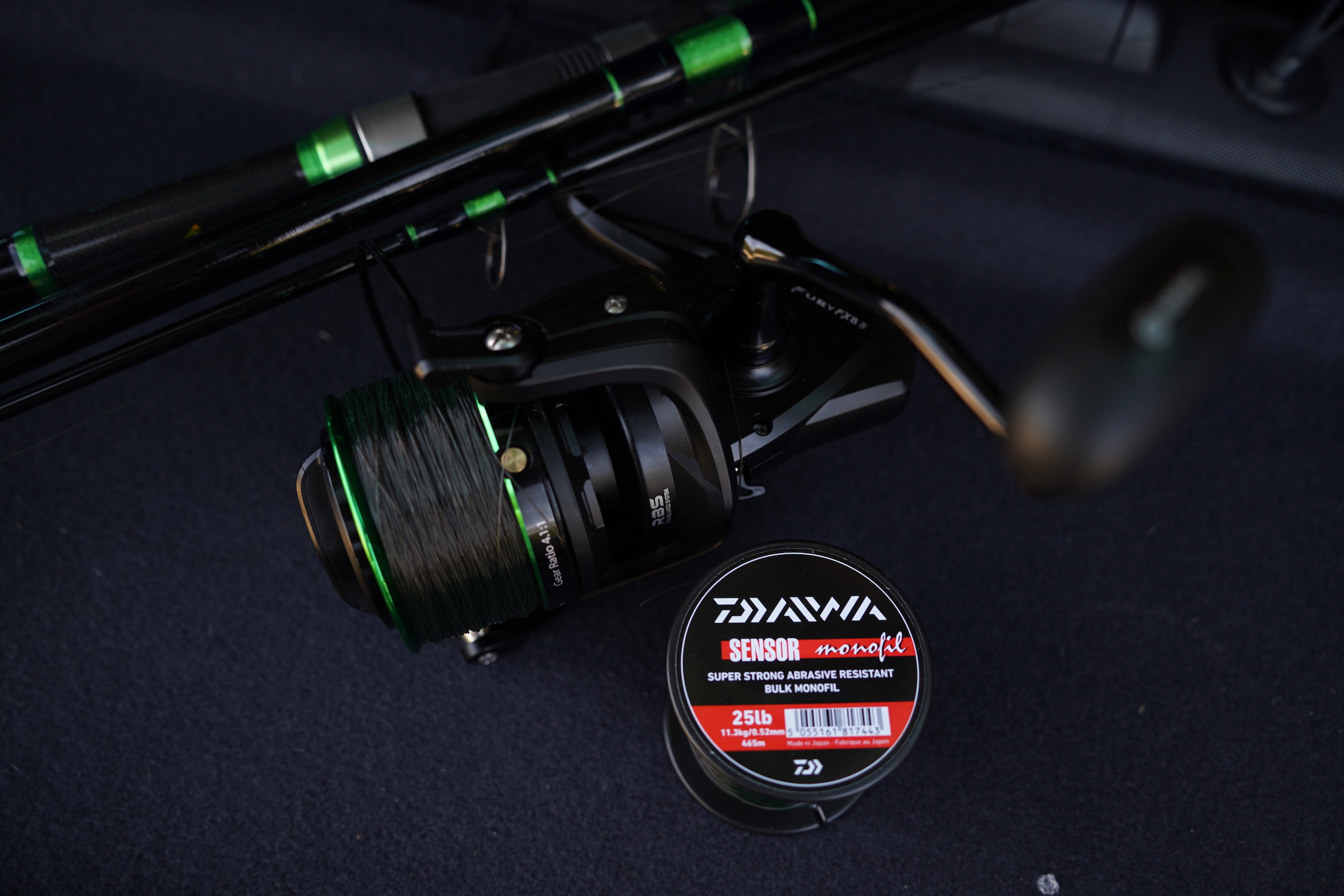
Telescopic rods have one major advantage and three serious weaknesses. They make it possible to fish on occasions when you otherwise would not be able to. For example, on a family holiday when there isn’t room for a full-length two-piece rod in hold luggage etc. The downsides are that telescopic rods are weaker, heavier and thicker, making them prone to snapping. They remain useful bits of kit because of how subtly they sit in the boot of the car…
Looking for a reel to match your rod? We have a guide to the best beachcasting reels and another guide to make sure you choose the right size for your rod!
Buying a budget beachcaster
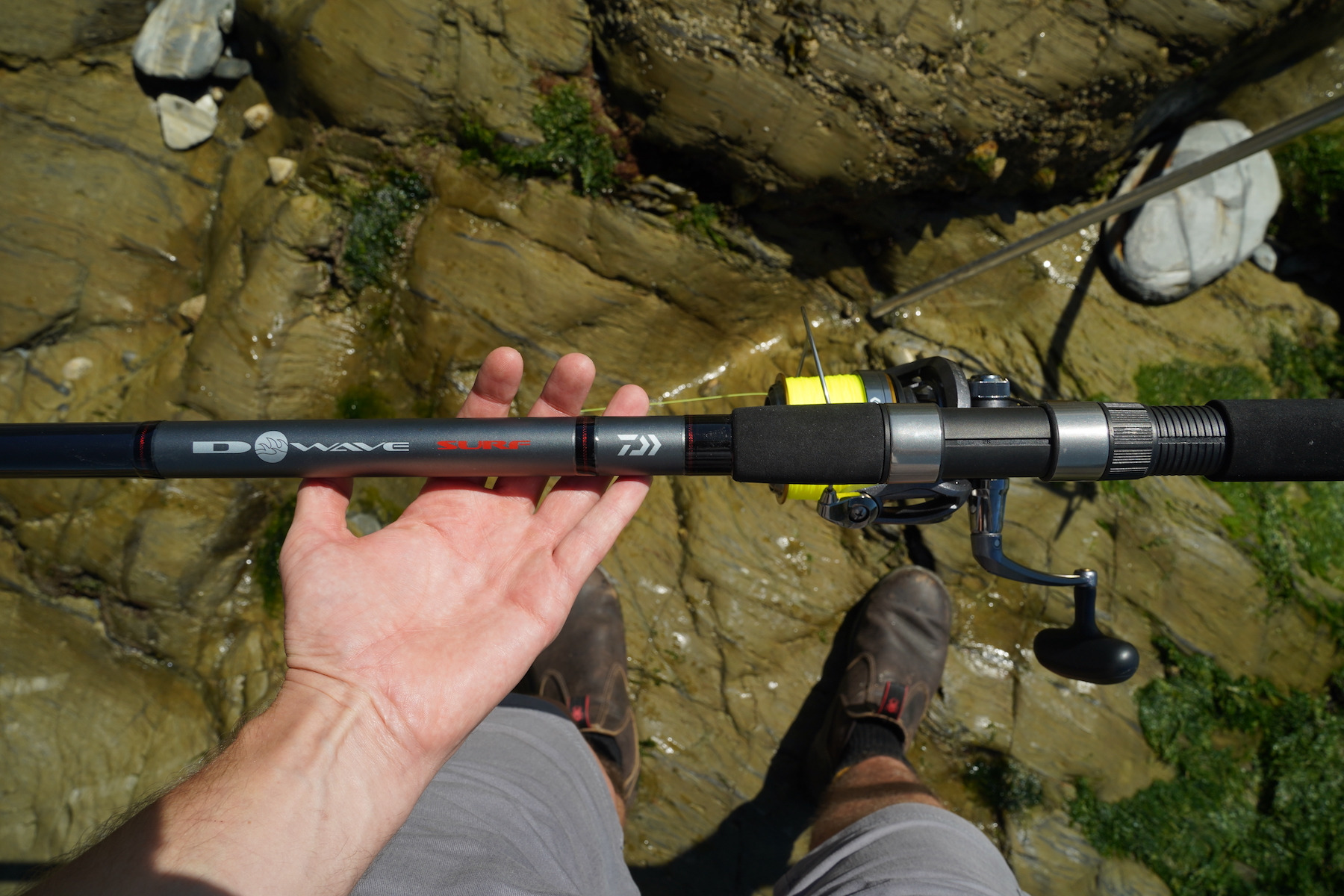
If you’re on a budget, stick with established tackle brands that still make affordable rods for the UK sea angling market, rather than the cheap rods sold in holiday shops. A simple, reliable rod is all you need to get fishing. A light beach caster that casts up to 6oz is a good budget choice. It’s best for fishing sandy beaches or estuaries, and would also be fine from rock marks as long as you cast on the edges of the rough ground rather than straight into it. Expect simpler eyelets than on more expensive rods.
Choosing a fixed spool beachcaster
Around 13/14ft is a great length for a fixed spool beach caster if you seldom head out on the rocks, and you can get a good one for around £100. A rod of that length casting up to 8oz is ideal for fishing in surfy conditions, when you want to keep your line up out of the water and cast beyond the breakers. Many manufacturers also make ‘bass’ versions of their surf rods, with a more sensitive tip and a slightly shorter length. Bear in mind that a rod this long is awkward to use on a harbour wall, and a sensitive tip is not ideal for pulling through snags over the roughest ground for fish like conger or huss.
How long should my rod be for the types of mark near me?
The best rod length for harbour wall fishing is 10ft; for rough ground rock fishing, it’s 12ft; for clean-bottomed estuaries, it’s 12ft; for huge clean-bottomed estuaries and shallow beaches, it’s 14ft. All these numbers just reflect what most anglers tend to settle on, but ultimately it’s a personal choice. A rod longer than 10ft on a harbour wall can be a hindrance to other anglers and is less suited to close-range fishing because of its length or mackerel feathering because of its weight.
A 12ft rod for rock fishing is useful because you don’t need a long cast from many rock marks, as the water is often deeper. Longer rods are more awkward to carry and are sometimes even unsafe to carry depending on the mark. Shorter rods struggle to get the distance. Finally, 12ft rods are great for your average British estuary because you usually don’t need a huge cast and they are lighter and therefore more fun to play fish on.
What is the difference between multiplier and fixed spool rods?
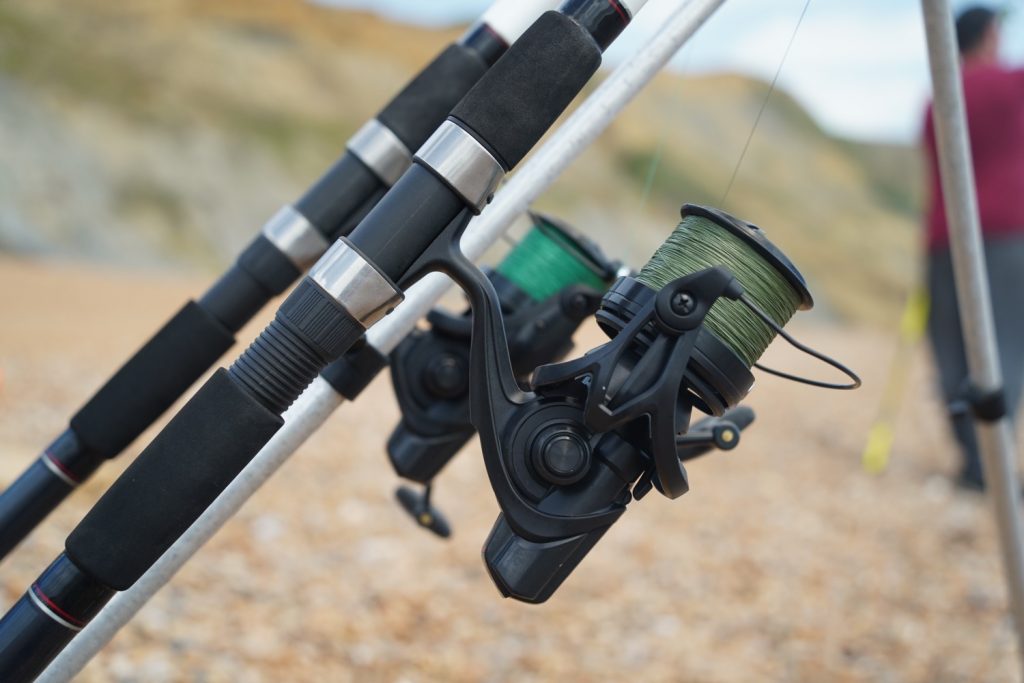
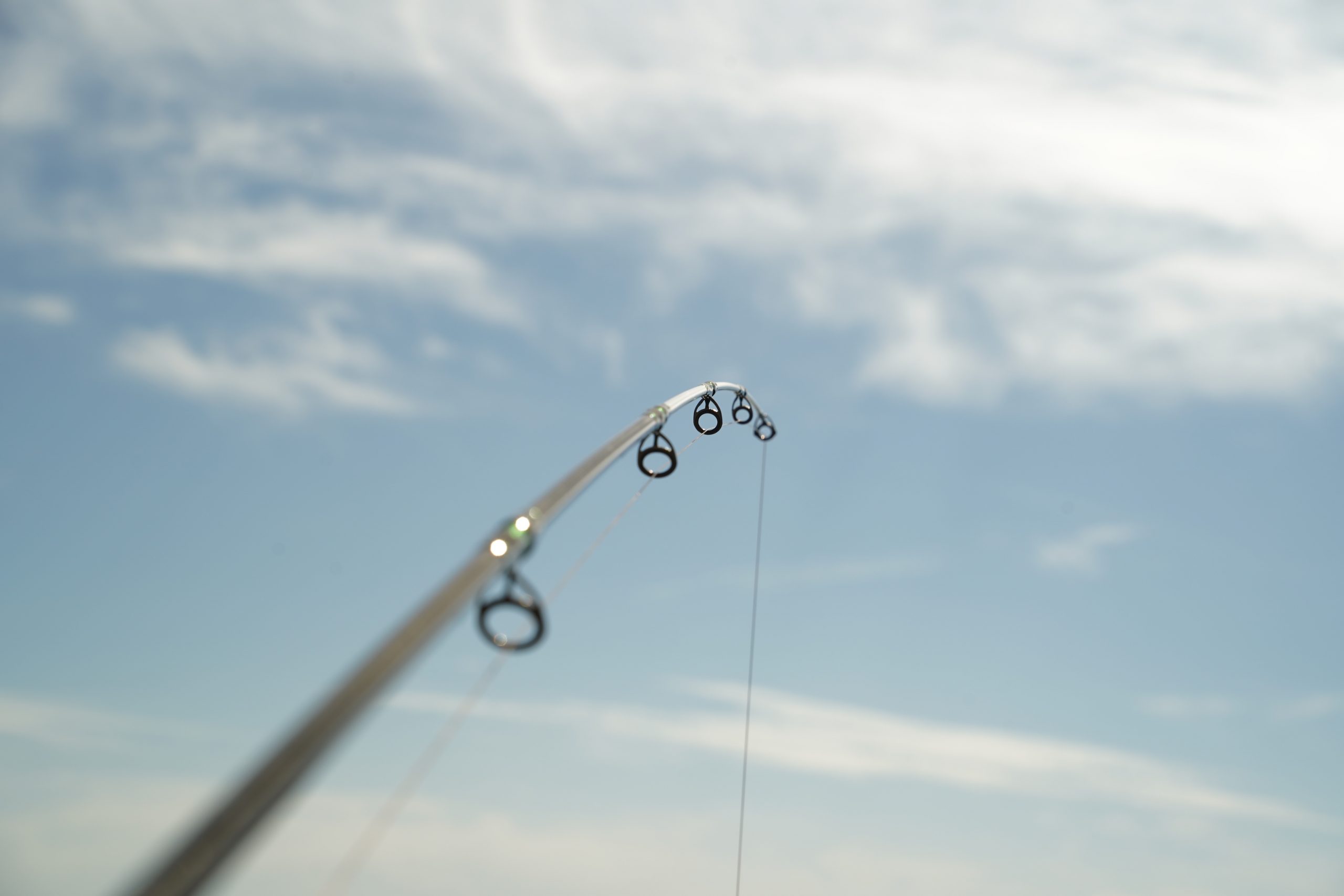
Different beachcasting rods can be designed for different reels. Multiplier beachcasting rods typically have more smaller eyelets compared with a fixed spool. This is to do with how the line comes off the spool. A fixed spool beachcaster will typically have a much bigger first eyelet. Generally, you can use a multiplier with a fixed spool rod, but a fixed spool reel on a multiplier rod can struggle, causing a decrease in casting distance. In rod descriptions, an “M” means its a multiplier rod, with “F” being fixed spooled.
What action is best in a beach caster?
Rod actions refer to the way the rod bends. When you shake a fast action rod, the rod snaps back into shape fast. Fast action rods also bend closer towards the tip. When you shake a slow action rod, the rod takes longer to recover, and the bend is more consistent throughout the rod. A slow action rod will generally bend more towards the handle.
There are two main types of rod action in beach casters: fast action and progressive action.
Fast action rods are best for pendulum or competition casting. They allow you to send rigs flying the greatest distance. For this reason, they are the best choice on huge, shallow beaches or larger estuaries where channels are further out.
Progressive action rods are more often found in shorter beach casters under 13ft. They are more commonly used for fishing closer in. Unless you are trying to cast a very long way, you can safely ignore rod actions with no real repercussions. If you go from a fast action rod to a slow action or vice versa you may find the rod feels odd. It’s personal preference.
What are some problems that occur with beach casters I should be aware of?
As long as you look at the side of the rod that says how much weight the rod can cast, and you aim to cast about 75% of that maximum, you’re good. That, and using good quality line will allow you to cast a long way and have a much better connection to your bait than most anglers will achieve. It sounds like a pretty small detail, but line strengths and the size of weights is where most beginner mistakes are probably made.
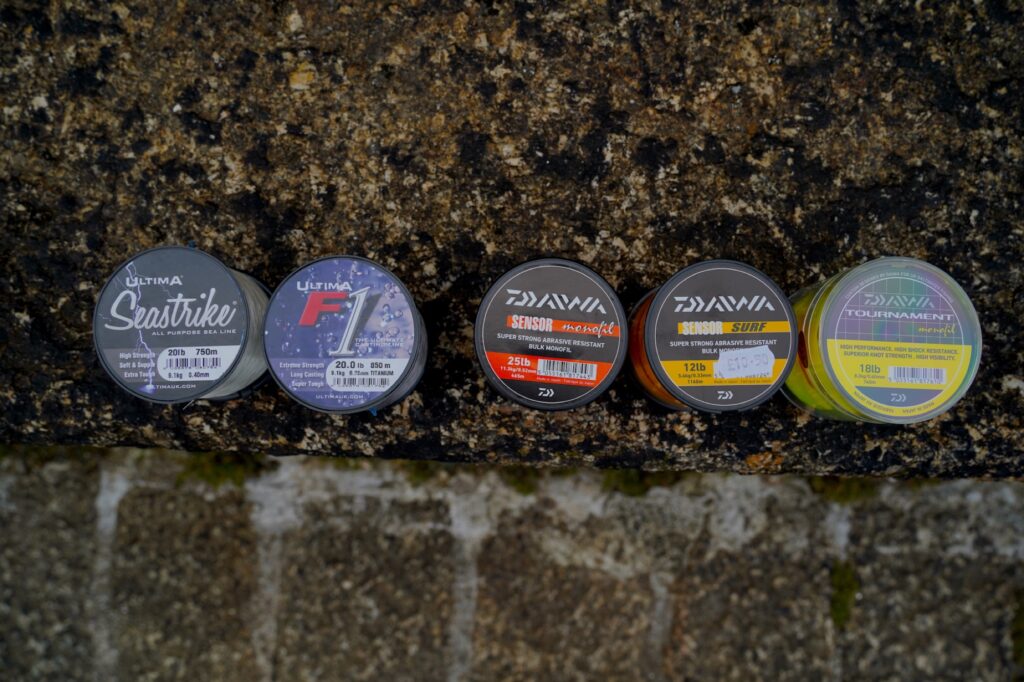
For example, if you’re using 30lb monofilament and casting 4oz on a rod that can cast up to 8oz, your casting distance is going to be reduced. You’d be better off with 25lb braided line, a 60lb shock leader and a 6oz lead. Using leads that are towards the upper limit of what your rod can cast will improve casting distance. Using lines that are too thick will really limit casting distance too.
How can I avoid buying a crap rod?
The other mistake would be going on holiday and assuming that the tackle shop only sells rods that are decent. Most tourists want something impossibly cheap because they will use the rods once, so the market is flooded with rods aimed at people that don’t actually fish. That’s one of the main reasons most people think fishing means not catching fish in the UK. If your rod doesn’t allow you to cast more than 15m, has no bite sensitivity and has line that coils just above your reel, of course you’re probably not going to catch anything!